Utah's First Community-Informed Transit CX Plan
Researching and composing a CX Action Plan for Utah Transit Authority in support of their strategic priority of "Exceeding Customer Expectations," integrating rider voice into agency planning for the first time in the agency's history.
Context
The Utah Transit Authority serves the Salt Lake City metro area and surrounding communities across northern Utah. Despite Customer Experience being named a key objective in UTA's Long-Term Strategic Plan, the agency had never created a formal strategy for how to actually improve it. Motivf was hired to lead the research, community engagement, and writing of their first-ever CX Action Plan. Blank page to board-approved document, in eight months.
The Problem
UTA had identified "Exceeding Customer Expectations" as a strategic priority but had no roadmap for getting there. No CX strategy. No documented rider research. No cross-departmental alignment on what the customer experience even was.
This engagement had four goals:
- Determine the structure and content needs of a CX Action Plan
- Conduct research to fulfill those needs
- Prioritize improvement projects with riders and staff
- Design and deliver a polished, board-ready document
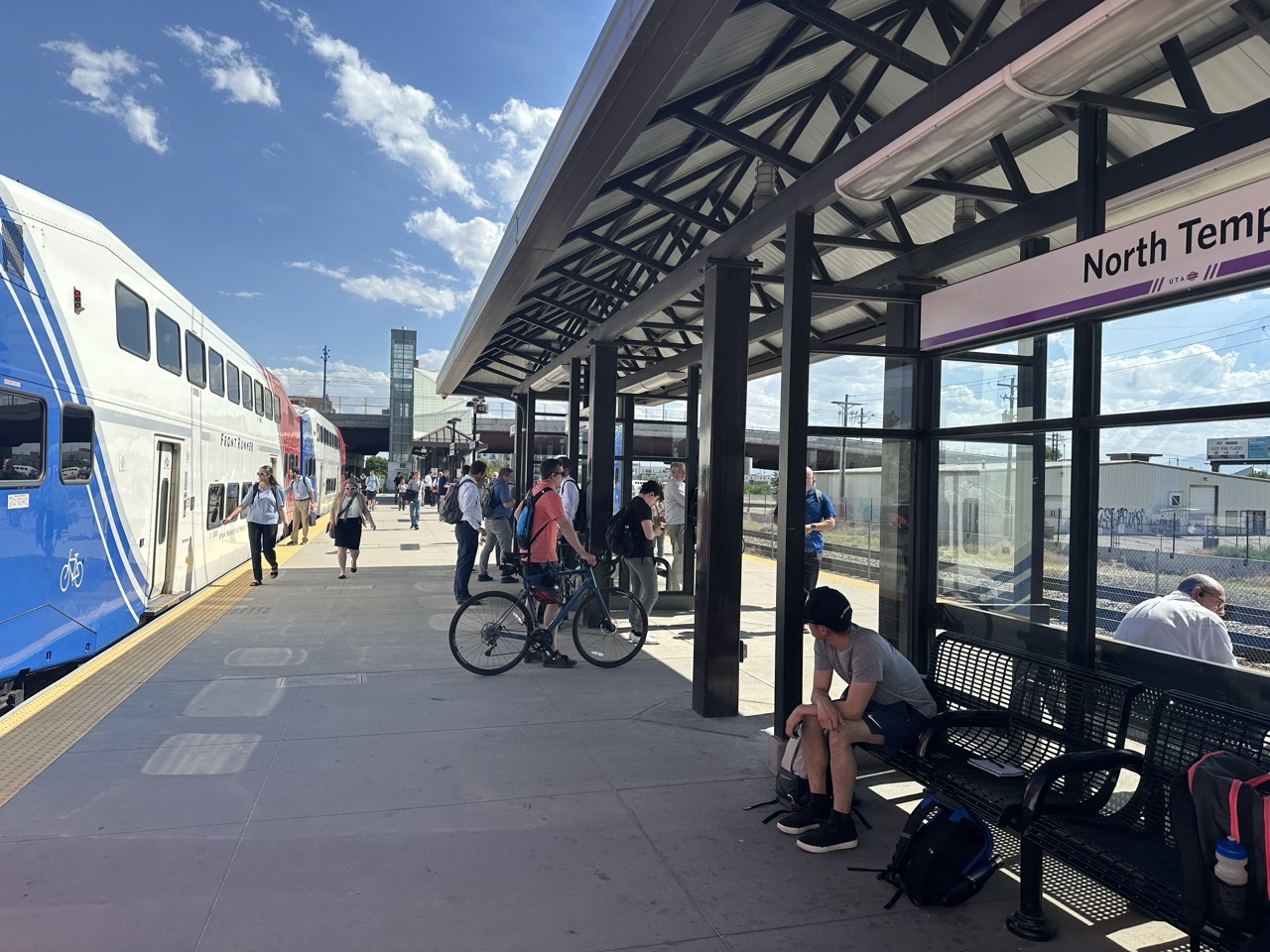
Utah Transit Authority serves 2.5 million+ annual riders across northern Utah.
Winning the Work
Before a single interview was conducted, we had to earn the project. Rather than delivering a standard slide presentation, we reframed the oral proposal as a mini-workshop, pulling key UTA stakeholders into a brief hands-on activity that demonstrated our human-centered design philosophy in real time. Showing, not telling, what it would feel like to work with Motivf.
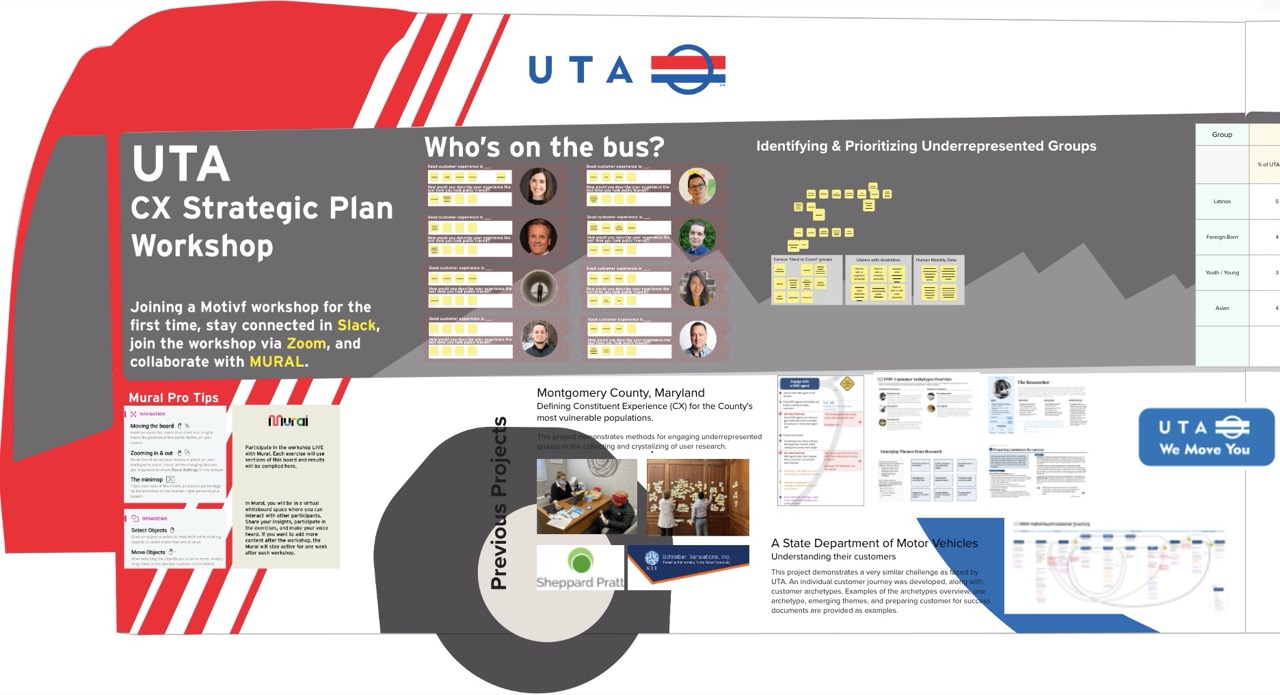
Proposal workshop on Mural: an interactive demo rather than a slide deck.
Setting the Foundation
Project Timeline
Eight months sounds like a lot until you're coordinating stakeholder interviews, cross-departmental workshops, two separate trips to Utah, and a final document that needs board approval. We co-created a project timeline with UTA staff from day one, setting shared expectations, locking in key engagement dates, and protecting the moments that mattered most: direct time with customers and staff.
Stakeholder Interviews and Table of Contents Workshop
Early stakeholder interviews helped us understand what each department needed the Action Plan to actually do, not just what it should contain. We followed this with a "Build a Table of Contents" workshop in Mural, where UTA staff shaped the structure of their own plan. Getting buy-in at the outline stage meant far fewer surprises at the draft stage.
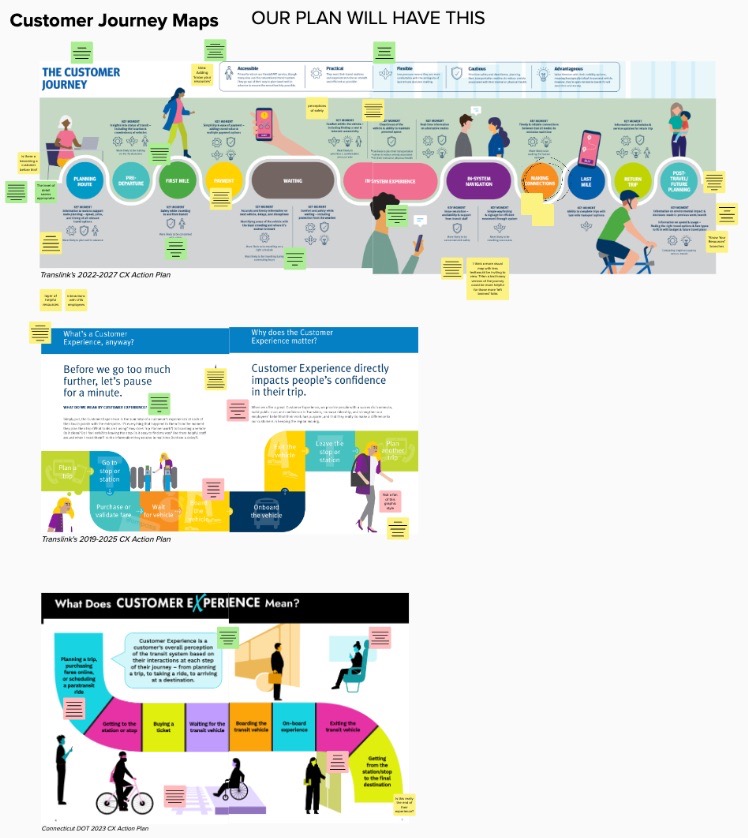
Collaborative table of contents workshop on Mural with UTA staff.
Research
Research Plan
With the plan's structure established, we designed a research approach around what UTA's customers could actually participate in, accounting for cost, time, and likelihood of engagement. The final plan included:
- Desk research: review of existing customer service data and prior surveys
- Community tabling at 25 events throughout Utah
- Observational and ethnographic research across all modes and key stops
- 18 in-depth customer interviews
- Customer experience survey
- Customer idea prioritization survey
UTA staff continued tabling and recruiting participants independently between our on-site visits, extending our reach across the full year.
UTA Staff Workshops
During our first visit to Utah, I facilitated an all-departments internal workshop to build a shared definition of customer experience across the agency, understand what each department needed the plan to deliver, and gather staff input on research priorities. A virtual Mural session the following day ensured remote staff weren't excluded.
The staff workshop was followed by a smaller session with UTA's executive team. Getting executive buy-in early, and giving them final say on key workshop decisions, turned out to be one of the most important choices we made.
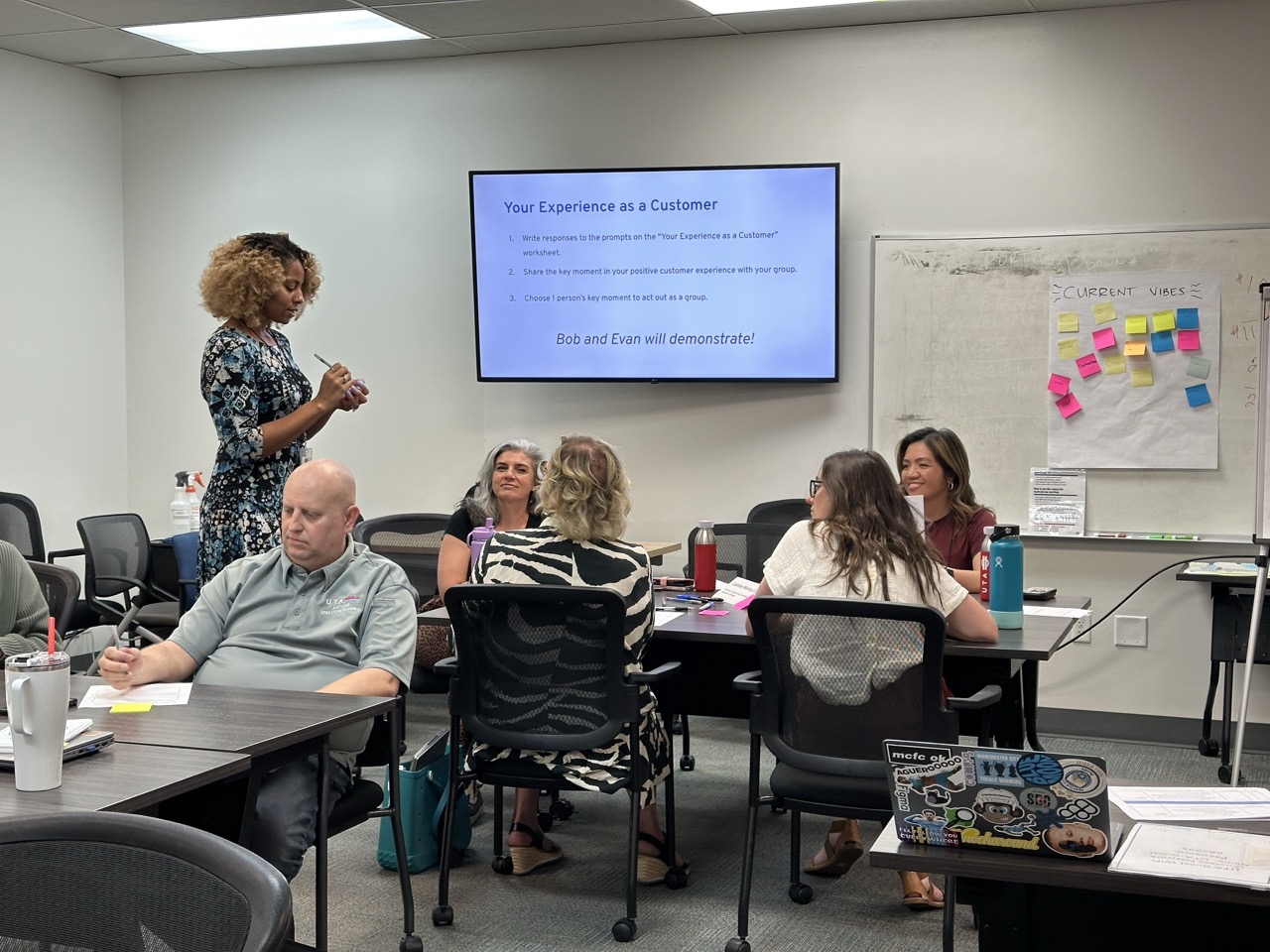
All-departments internal workshop during the first on-site visit to Utah.
Observational Research
For 13 days across two visits, I rode UTA. Every mode, multiple times a day. I waited at stops in the heat. I missed buses. I got dropped closer to my destination than the stop technically allowed because a driver made a judgment call. These weren't hypotheticals. They were the actual highs and lows UTA customers navigate every day, and experiencing them directly shaped everything that came after.
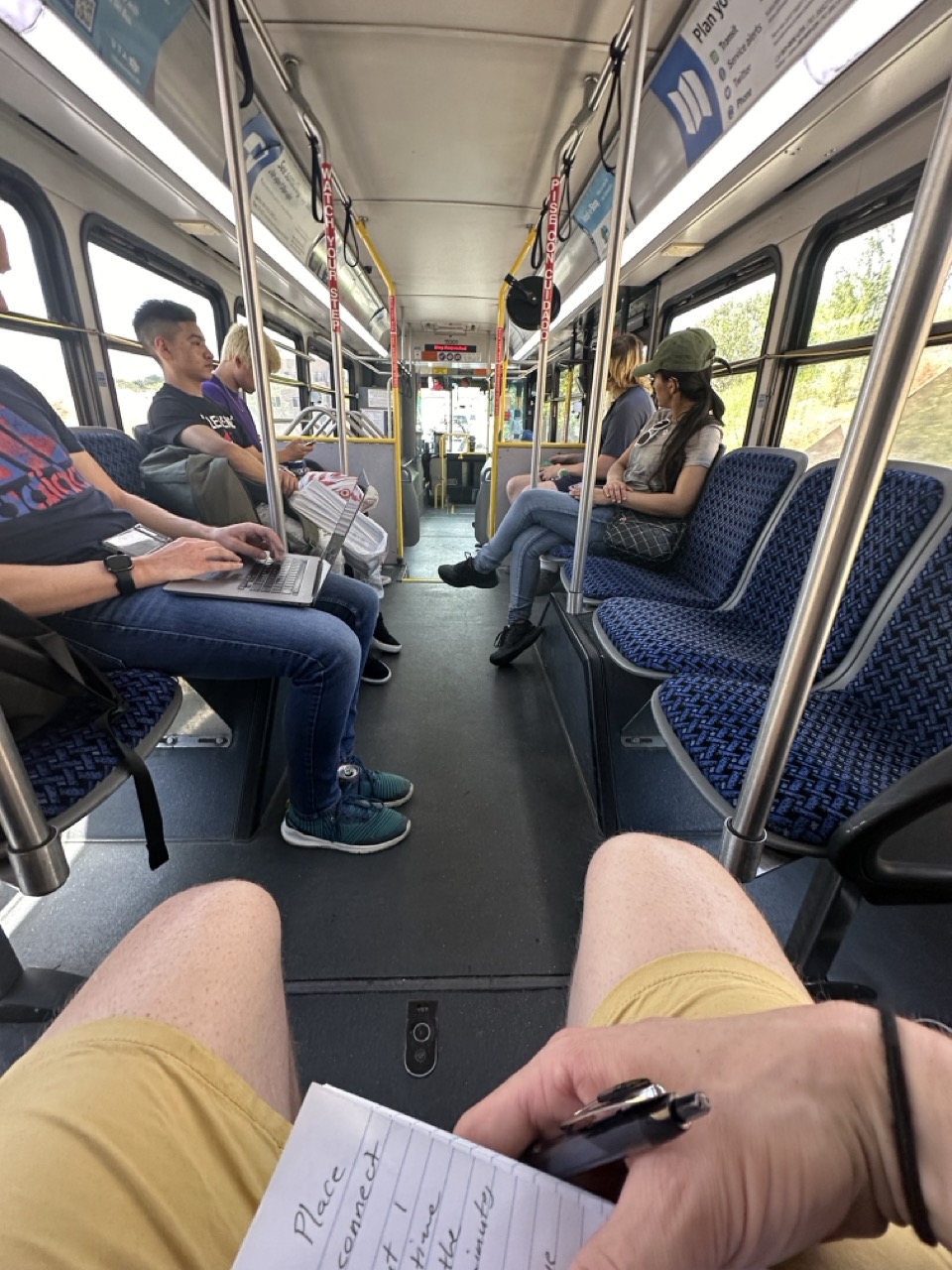
Synthesized observations from 13 days of ethnographic field research on UTA's system.
Community Tabling
25 tabling events across Utah. 384 unique customer comments collected. A deliberately diverse set of locations to reach riders across geographies, demographics, and trip purposes.
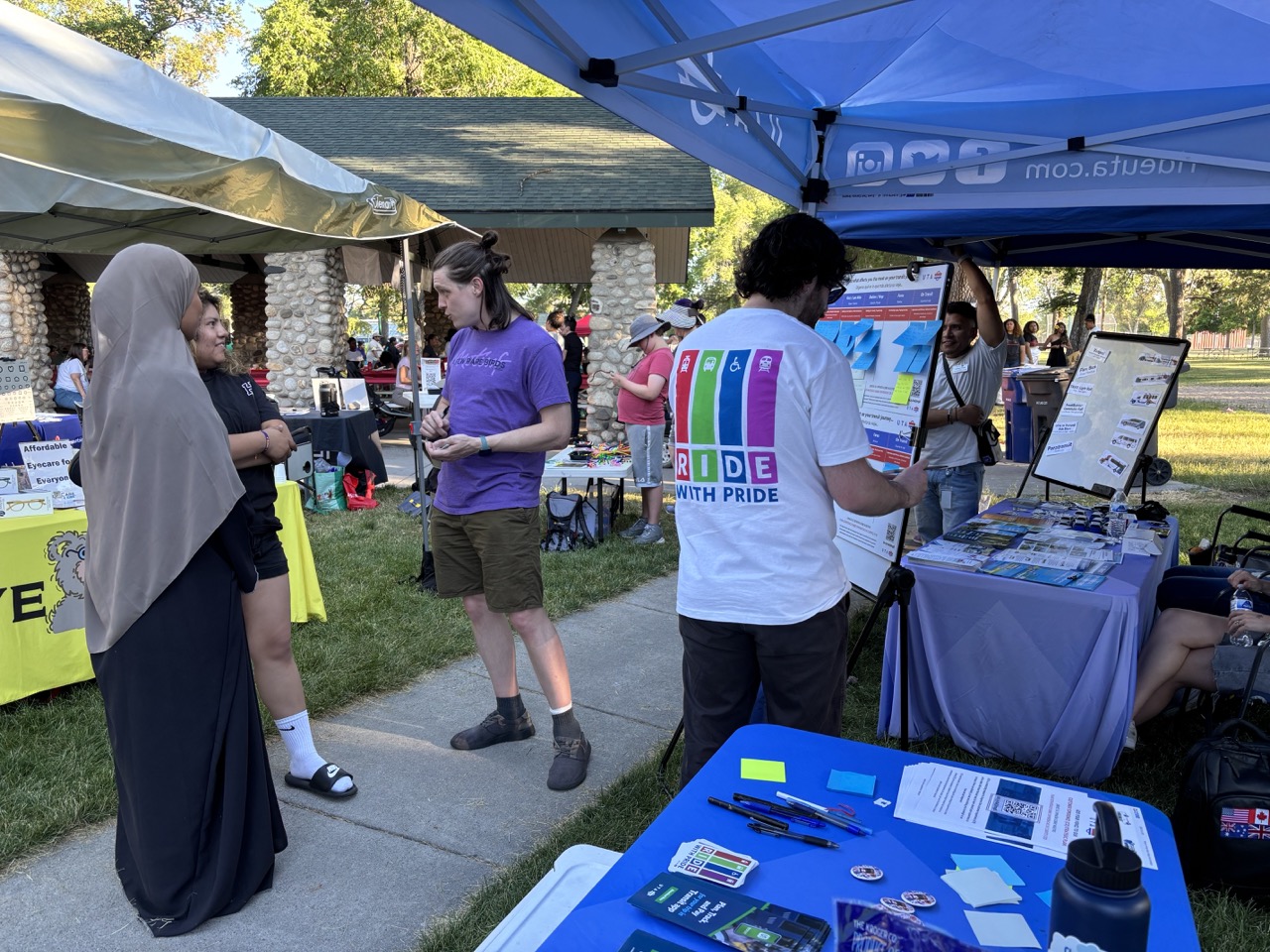
One of 25 community tabling events held across Utah to collect rider input.
Community Organization Engagement
An equitable research approach was a priority from day one, for both UTA and Motivf. By partnering with organizations like the Committee on Accessible Transportation, Visit Salt Lake, and the Community Advisory Committee, we reached participants from traditionally underrepresented communities, including riders with heightened accessibility needs and several non-native English speakers who don't typically appear in standard transit surveys.
Customer Interviews
18 in-depth interviews with real UTA riders, including multiple participants with accessibility needs and several non-native English speakers. Qualitative depth to complement the survey volume.
A Note on Survey Design
Midway through the project, we learned that another UTA team was planning a separate survey to run concurrently with ours. Rather than letting two surveys compete for the same riders' attention, I proposed combining them. The other team's focus aligned with a common pain point our own participants kept raising, one that fell just outside our scope. Merging the surveys reduced fatigue, increased completion rates, and gave both teams better data. A small decision that made a meaningful difference.
Prioritization
Working Group Workshop
The research gave us the raw material: a customer journey, the make-or-break moments along it, and a clear picture of rider mindsets. But the most important output wasn't the research itself. It was what came next.
In a second all-departments workshop, UTA staff were presented with improvement ideas gathered directly from customers throughout the research process. Staff vetted each idea for organizational feasibility and contributed their own. By the end of the session, we had 18 distinct, unfunded potential projects, each one grounded in both customer need and internal reality.
Community Prioritization Survey
Those 18 ideas were then handed back to the community. A "Customer Idea Prioritization" survey, distributed digitally and in paper format at stops and stations throughout Utah, asked riders to vote for their top three. Over 2,000 responses came in. Five ideas rose to the top as the priorities most likely to meaningfully improve the customer experience.
Design and Delivery
Content Presentations
After a month of synthesis and analysis, a draft of the plan's content was presented to stakeholders in rounds: the working group, executives, board members, and departments intentionally kept out of earlier phases to bring fresh eyes to the final product. One unexpected moment: I facilitated a brief HCD activity with UTA board members during the content presentation to help them understand what customer experience actually means at the ground level. It landed.
Visual Design and Delivery
Once content was locked, we worked closely with UTA's Communications team to ensure the document's visual design and tone aligned with UTA's brand guidelines. The final month was a cross-functional sprint inside Motivf, collaborating with graphic designers and information designers to turn months of research into a document that was not only rigorous, but genuinely readable.
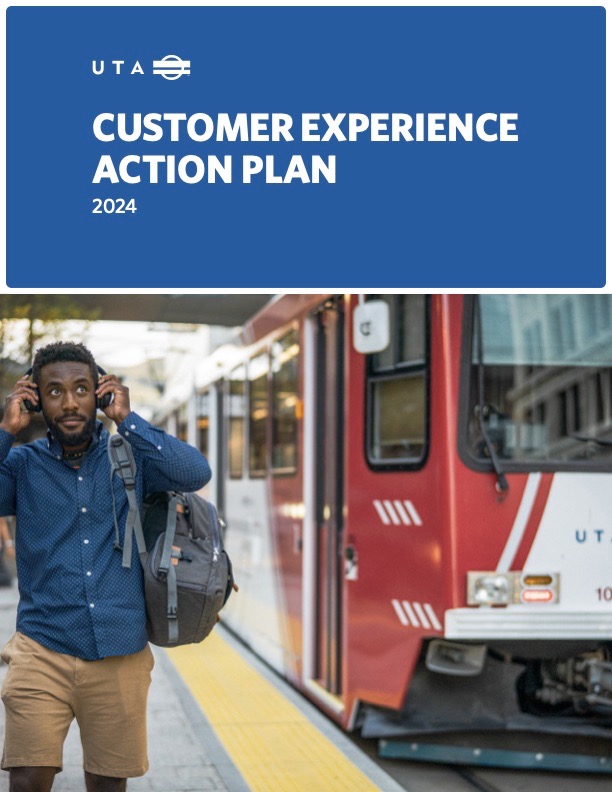
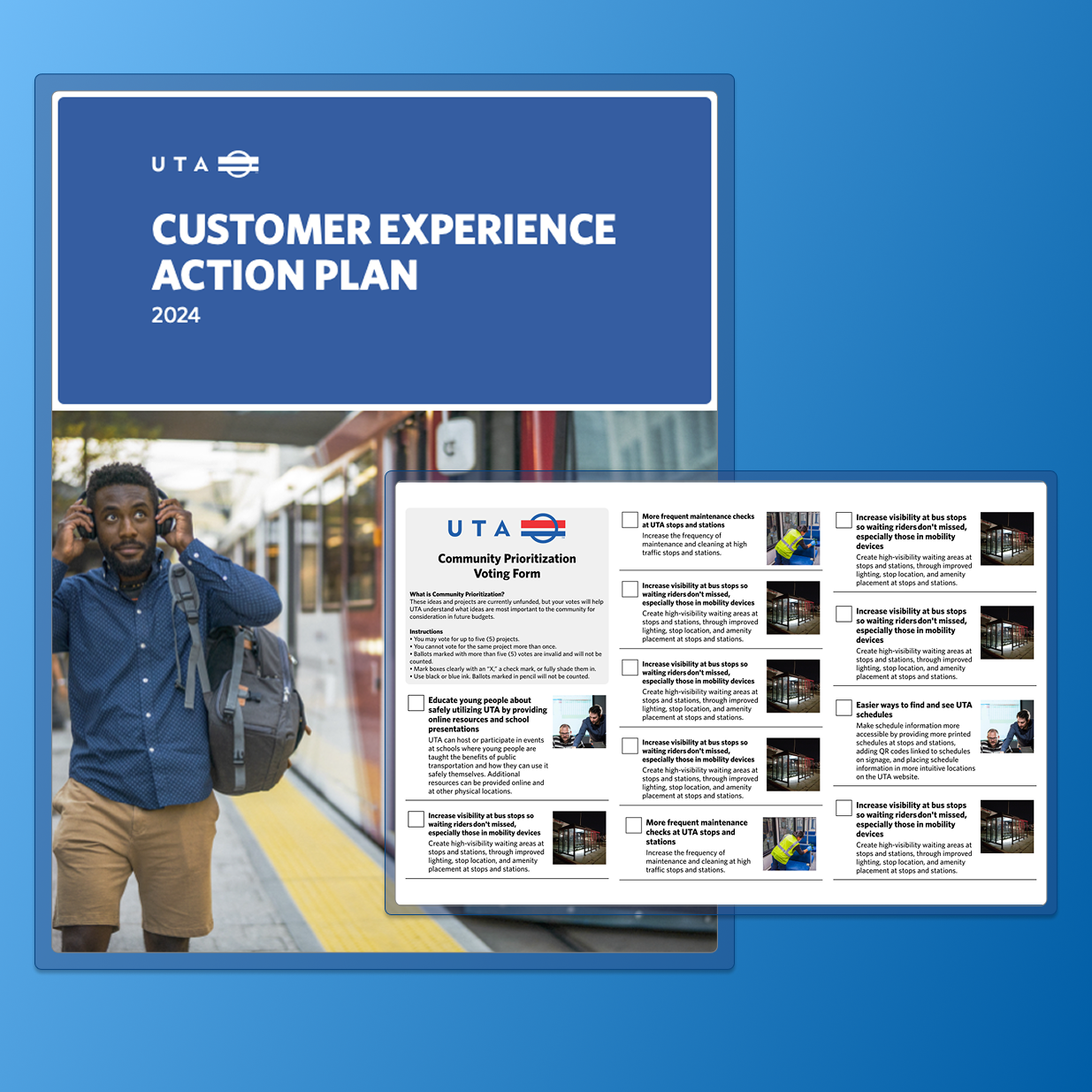
Final delivered CX Action Plan, December 2024. Available on UTA's website.
Results
The CX Action Plan was delivered to UTA in December 2024, on time, on scope, and with the full backing of the executive team and board.
For the first time in UTA's history, the agency has a documented understanding of who their customers are, what their experience looks like across all modes, and a concrete set of five prioritized projects to pursue. Alongside the deliverable, UTA received a metrics and measurement framework for tracking progress as the plan moves into implementation.
Execution of the plan's recommendations is now underway. UTA has already engaged Motivf for follow-on work. That's the clearest signal that the process earned trust, not just a deliverable.
Lessons Learned
Human-centered design works best when clients are active participants in it. The most durable outcome of this project wasn't the document, it was watching a large transit agency gradually shift from "we need a plan" to "we understand our customers" over eight months of genuine co-creation.
The other lesson I learned is about the importance of unglamorous work. Things like the combined survey, the virtual workshop for remote staff, and the board HCD activity were not in the original scope. Each one was a pivot or judgment call made in the moment to keep the process in line with UTA's goals and customer needs. This responsiveness allowed us to deliver a polished plan for the future by capturing reality of the present in meaningful ways.